Reducing CO₂ by 2030: Strategies for Businesses
Climate strategy does not begin with offsetting
Many companies have now set climate goals. But there is a significant difference between a goal on a presentation slide and an actually effective decarbonization strategy. Anyone who wants to substantially reduce their emissions by 2030 should not view climate protection as an isolated sustainability project. It involves energy supply, buildings, production, mobility, procurement, investments, and, increasingly, data as well. The key sequence of steps is relatively clear:
Understand, avoid, reduce, electrify—and only then responsibly address any remaining emissions.
Step one is a solid foundation
A good climate strategy begins with a question that a surprising number of companies cannot answer precisely: Where do our emissions actually come from? Direct emissions from a company’s own facilities and vehicles are typically referred to as Scope 1. Purchased energy falls under Scope 2. Scope 3 encompasses emissions along upstream and downstream value chains. Depending on the business model, the largest share of emissions can originate from very different sources. For an industrial company, process heat and electricity supply may dominate. For a retail company, it might be the supply chain. For a real estate company, it could be building energy. That is why a CO₂ strategy should not begin with a technology, but rather with a structured emissions and energy analysis.
Energy efficiency remains the primary lever
The cleanest kilowatt-hour is still the one that isn’t needed in the first place. Before investing in new generation facilities, it is therefore worthwhile to analyze equipment, buildings, and processes. Depending on the location, motors, compressed air, lighting, cooling, heat supply, process control, and building systems can offer significant efficiency potential. This is particularly relevant from an economic standpoint because efficiency measures have two effects simultaneously: they immediately reduce energy consumption and, at the same time, minimize the scale of the energy infrastructure that will be needed in the future. An efficient factory requires less photovoltaic capacity, less grid power, and possibly a smaller storage system than an inefficient factory with the same production volume.
Electrification is becoming the central path to transformation
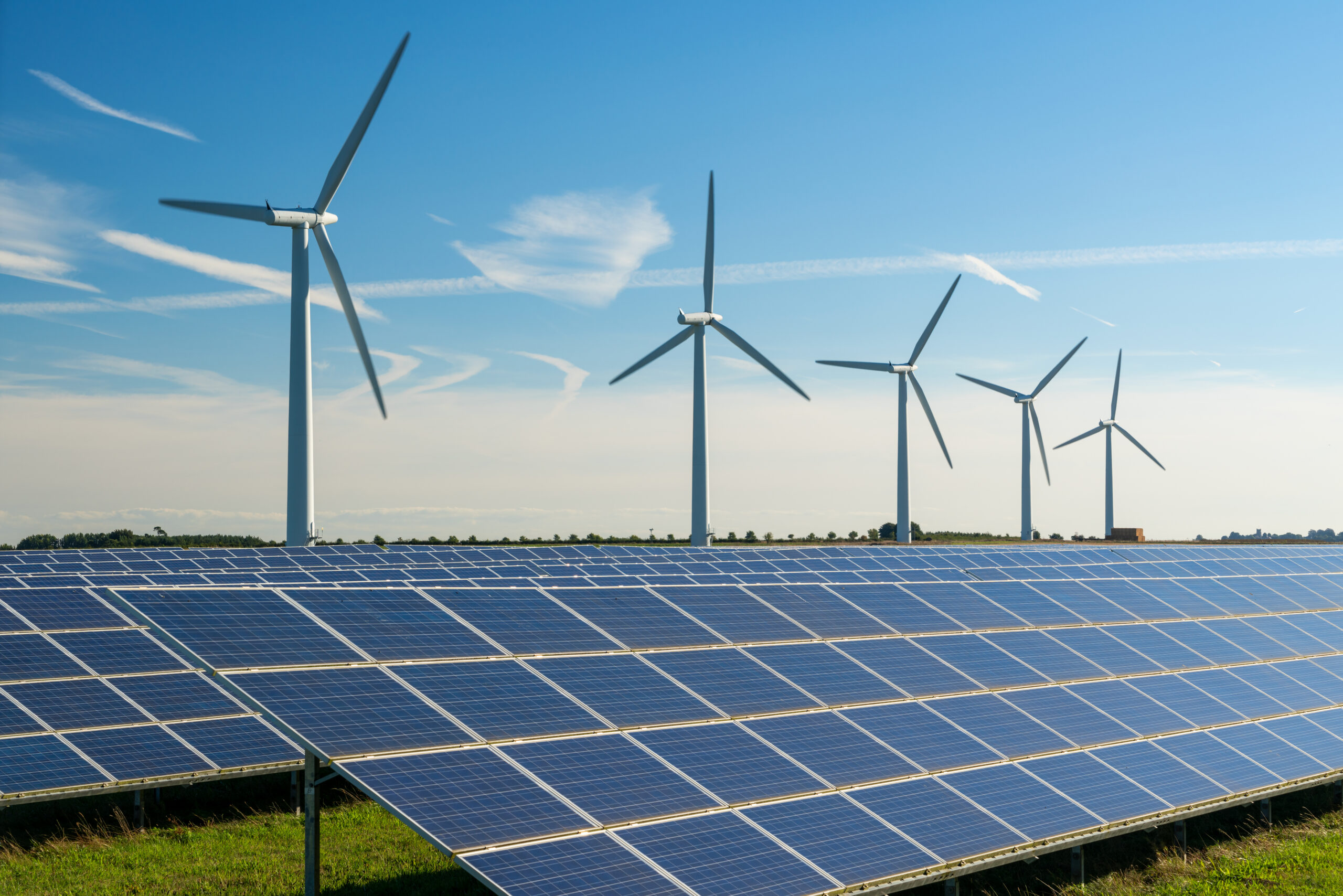
The expansion of renewable electricity generation is also increasingly transforming other energy sectors. Where technically feasible, fossil fuel-based applications can be replaced by electric processes—for example, by heat pumps, electric process heat, or electric mobility. While this does increase electricity demand, at the same time, this electricity can increasingly be supplied from renewable sources. This is precisely why the European Commission describes electrification and better integration of various energy sectors as central components of the European framework for the post-2030 period. For companies, this means that electricity demand should not be planned in isolation based on current consumption. A facility that currently requires ten gigawatt-hours of electricity could require significantly more after the electrification of heating and mobility. Energy planning must therefore take future loads into account.
In-house renewable energy generation creates strategic flexibility
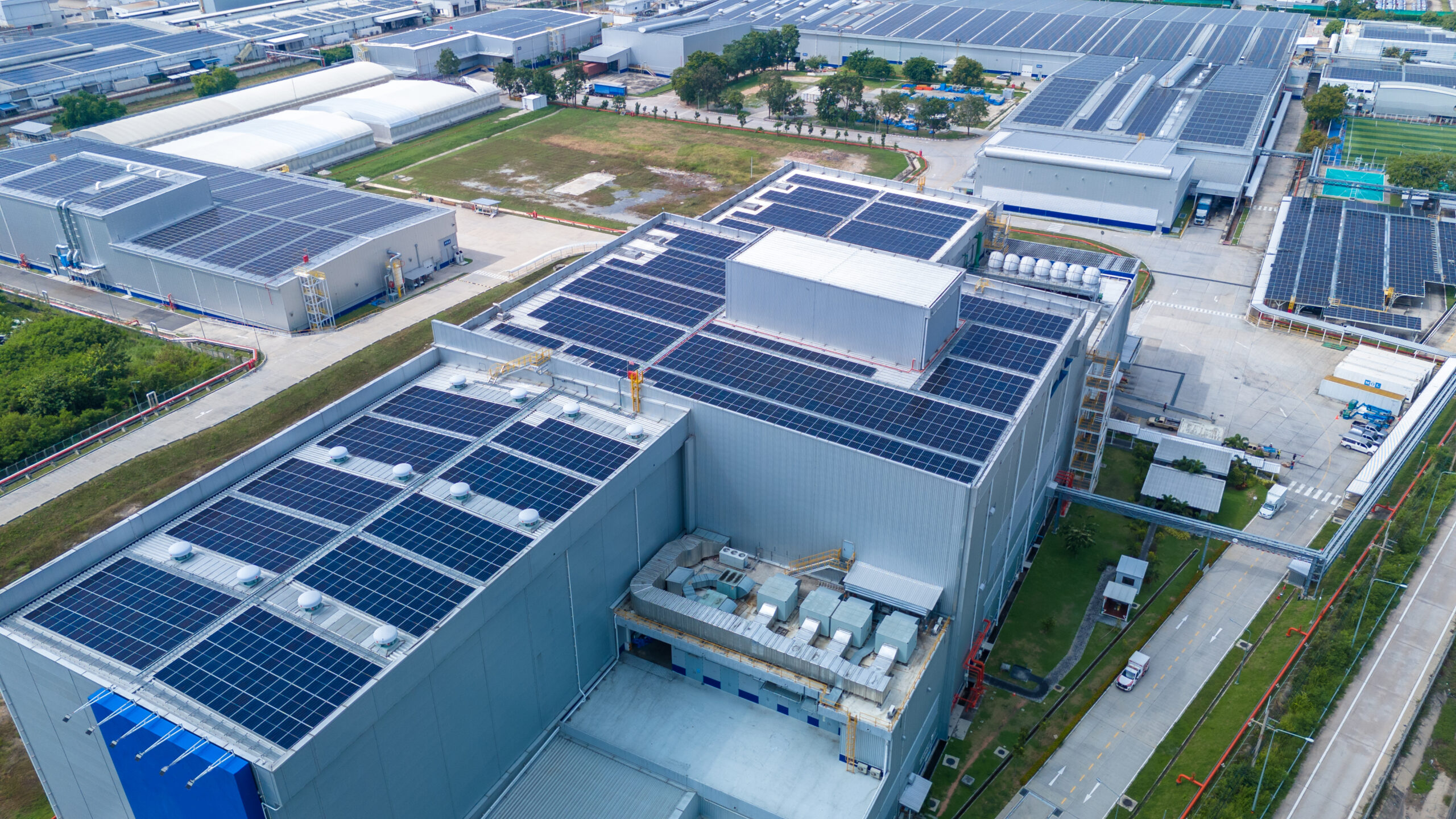
For many companies, photovoltaics is one of the most immediate ways to reduce Scope 2 emissions and their reliance on grid electricity. Large roof areas, parking lots, or available open spaces can be used for on-site generation. However, the maximum installable capacity alone is not the decisive factor. A project becomes economically viable above all when the generation profile and consumption are well aligned. In addition, companies can procure renewable energy through power purchase agreements or other procurement models. The optimal solution can therefore consist of several components: on-site generation, long-term procurement, grid electricity, and, if necessary, battery storage.
Storage and load management are becoming more important
As the level of electrification increases, the load profile of businesses is also changing. Electric vehicles are charging. Heat pumps are running. Production facilities are generating power peaks. At the same time, photovoltaic systems generate power depending on weather conditions. As a result, the question becomes increasingly important, when Energy is used. Battery storage and smart load management can help coordinate these processes. Not every consumer needs to be running at all times. Many companies have flexible loads that can be shifted to off-peak or lower-emission time slots. Energy is thus increasingly becoming an actively controllable factor of production.

Sustainability data remains relevant—even if regulations are simplified
European sustainability regulations underwent significant changes in 2025 and 2026. The scope of the CSRD was narrowed, and European reporting standards were greatly simplified in 2026; according to the Commission, the number of mandatory data points was reduced by more than 60%. However, this does not mean that emissions data will become irrelevant for companies. Major customers, banks, investors, and insurers may still require sustainability information. The EU has therefore also developed a voluntary reporting standard for smaller companies that do not fall directly under the CSRD. Robust energy and emissions monitoring is therefore advisable regardless of any legal reporting requirements. Without knowing your data, you can neither measure progress nor prioritize investments effectively.
Compensation belongs at the end—not at the beginning
CO₂ offsetting can play a role for residual emissions that are difficult to avoid. However, it should not be viewed as a substitute for actual emissions reductions. A company that continues to operate fossil-fuel-based processes and offsets them exclusively through credits is pursuing a fundamentally different strategy than a company that first reduces consumption, electrifies processes, and decarbonizes its energy supply. Credible climate strategies should therefore adhere to the following principles: Reduction before compensation. The fewer residual emissions there are, the more robust a subsequent offset strategy will be.
2030 Is a Question of Investment
Perhaps the key point is the time horizon. 2030 is only a few investment cycles away. A heating system, a transformer, a production line, or an energy plant procured today will most likely still be in operation in 2030. That is why every major investment made today should already take future energy and emissions strategies into account. Companies that don’t begin thinking about their 2030 goals until 2029 will simply be unable to implement many technical options in time. Planning, grid connection, permitting, bidding, and construction of major energy projects take time. The best climate strategy for 2030 therefore does not begin in 2030. It begins now.